The first trimester of pregnancy is filled with milestones, and one of the most significant is the combined screening test. For many expecting mothers in Jhansi, this is the first time they encounter a medical result that comes with a risk figure rather than a simple normal or abnormal answer. A result that says 1 in 500 or 1 in 150 for Down syndrome can feel deeply unsettling without a clear explanation of what those numbers actually mean and what they are asking you to do with them. At Jhansi Diagnostics & Fetal Medicine Centre, Dr Furquan Ahmad, MBBS MD, ensures every patient who undergoes first trimester combined screening leaves with a genuine understanding of their results rather than a number that generates more questions than answers.
Here is a complete, plain-language guide to what first trimester combined screening involves and what the results actually tell you.
What Is First Trimester Combined Screening?
First trimester combined screening is a risk assessment test performed between 11 and 14 weeks of pregnancy. It combines three pieces of information to calculate a personalised risk figure for the most common chromosomal conditions: Down syndrome, which is caused by an extra copy of chromosome 21, Edwards syndrome, caused by an extra copy of chromosome 18, and Patau syndrome, caused by an extra copy of chromosome 13.
The three components that are combined to calculate the risk are the mother’s age-related background risk, the nuchal translucency measurement from the NT scan, and the results of a blood test called the double marker, which measures two substances in the mother’s blood: pregnancy-associated plasma protein A and free beta human chorionic gonadotrophin. Each of these components contributes information about risk, and combining them produces a far more accurate risk calculation than any single component alone. You can read more about the NT scan and related services on the fetal medicine page at Jhansi Diagnostics & Fetal Medicine Centre.
What Does the Risk Figure Actually Mean?
This is the question most patients need answered most urgently. When a combined screening result comes back as 1 in 300 for Down syndrome, what does that number actually mean?
It means that out of 300 pregnancies with the same combination of maternal age, NT measurement, and blood test results as yours, approximately 1 would be expected to have Down syndrome and 299 would not. It is a probability statement, not a diagnosis. A result of 1 in 300 does not mean your baby has Down syndrome. It means the probability is estimated at 1 in 300 based on the available information.
Equally importantly, a low-risk result does not guarantee that the baby does not have a chromosomal condition. A result of 1 in 5000 means the probability is very low, but it is not zero. First trimester combined screening is a risk assessment tool, not a diagnostic test. It tells you the probability. It does not tell you the answer.
Dr Furquan Ahmad explains this distinction carefully to every patient at Jhansi Diagnostics & Fetal Medicine Centre because misunderstanding it leads to either unnecessary panic about a result that is actually reassuring in context, or inappropriate reassurance from a low-risk result that does not constitute a guarantee.
What Is Considered High Risk and What Is Considered Low Risk?
The threshold between high risk and low risk varies slightly depending on the laboratory and the screening programme, but a commonly used cut-off is 1 in 250 or 1 in 300. Results above this threshold, meaning a risk figure of 1 in 250 or higher, are generally classified as high risk and typically prompt a discussion about further testing options. Results below this threshold are classified as low risk and generally do not require further chromosomal investigation unless the patient requests it.
It is worth understanding what these thresholds mean in practice. A result of 1 in 251 and a result of 1 in 249 are statistically almost identical. The threshold is a clinical decision-making tool, not a bright line that separates affected pregnancies from unaffected ones. Dr Furquan Ahmad interprets results in the full clinical context rather than applying the threshold mechanically, which is why detailed counselling is essential for results that fall close to the cut-off in either direction.
What Factors Influence the Combined Screening Result?
Several factors contribute to the final combined screening risk figure, and understanding each one helps patients make sense of their result.
Maternal age is the most significant background factor. The risk of chromosomal conditions, particularly Down syndrome, increases with maternal age. A 25-year-old woman has a much lower age-related background risk than a 40-year-old woman, which means the same NT measurement and the same blood test results will produce a different final risk figure depending on the mother’s age. This is why age is always factored into the calculation.
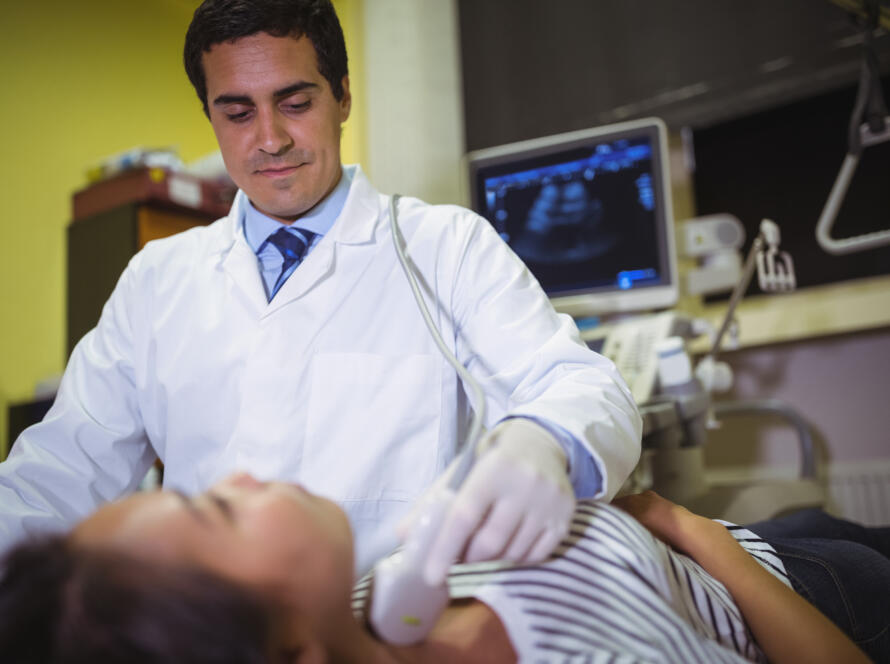
The nuchal translucency measurement is the most important ultrasound component of the combined screen. A larger NT measurement increases the risk figure. A smaller NT measurement is reassuring. However, the NT measurement must be taken at the correct gestational age, by a trained and accredited operator, using standardised technique. An inaccurate NT measurement, whether too large or too small due to suboptimal technique, will produce an inaccurate risk calculation. This is why Dr Furquan Ahmad performs NT measurements at Jhansi Diagnostics & Fetal Medicine Centre with strict adherence to the technical standards required for accurate combined screening. You can find out more about the ultrasound services at the centre on the dedicated page.
The double marker blood test results reflect the levels of two placental proteins in the mother’s blood. In Down syndrome pregnancies, free beta hCG tends to be elevated and PAPP-A tends to be low. In Edwards and Patau syndrome pregnancies, both markers tend to be low. Deviations from the expected levels for the gestational age contribute to an adjusted risk figure that is higher or lower than the age-related background risk alone.
Additional ultrasound markers assessed at the time of the NT scan can also contribute to the risk calculation in some screening programmes. The presence or absence of the nasal bone, the tricuspid regurgitation on Doppler assessment of the fetal heart, and the ductus venosus flow pattern are each associated with chromosomal conditions and can refine the risk estimate when included in the calculation.
What Are the Options After a High-Risk Result?
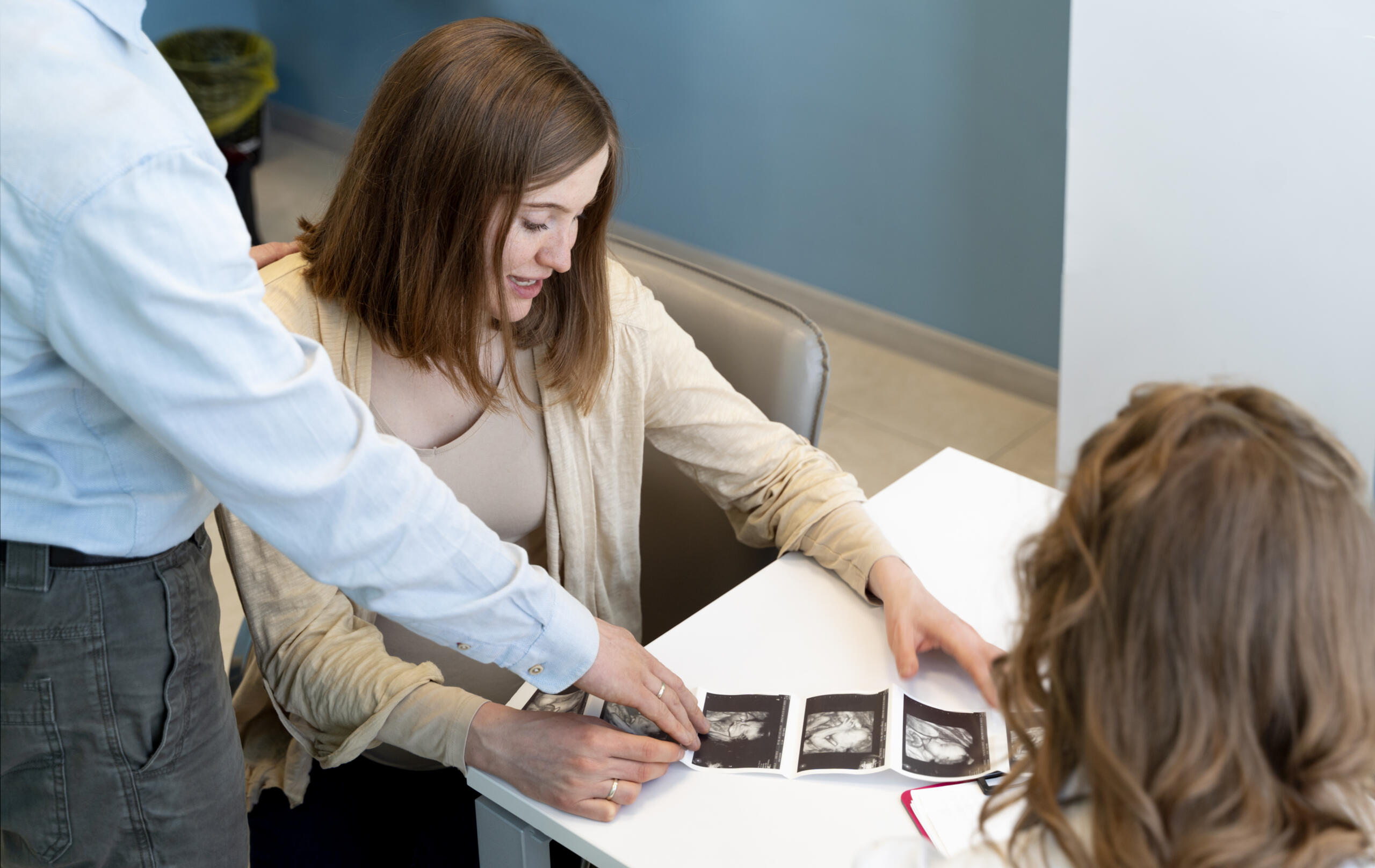
Receiving a high-risk result from first trimester combined screening is a difficult moment. Dr Furquan Ahmad approaches this conversation at Jhansi Diagnostics & Fetal Medicine Centre with clarity, honesty, and care, ensuring families understand their options before making any decisions.
The first option is non-invasive prenatal testing, commonly known as NIPT. NIPT analyses cell-free fetal DNA circulating in the mother’s bloodstream and provides a much more accurate assessment of the risk of Down syndrome, Edwards syndrome, and Patau syndrome than combined screening alone. It has a detection rate of over 99 percent for Down syndrome with a very low false positive rate. It is non-invasive, carries no risk to the pregnancy, and can be performed from 10 weeks of pregnancy onwards. A high-risk combined screening result followed by a low-risk NIPT result is highly reassuring, though NIPT is still a screening test rather than a diagnostic one.
The second option is invasive diagnostic testing through chorionic villus sampling, which can be performed from 11 weeks, or amniocentesis, which is typically performed from 15 to 16 weeks. Both procedures involve taking a sample directly from the pregnancy, either placental tissue in CVS or amniotic fluid in amniocentesis, and analysing the baby’s chromosomes directly. These tests provide a definitive chromosomal diagnosis rather than a risk figure. They carry a small procedural risk of pregnancy loss, estimated at less than 1 percent in experienced hands, which is why they are generally offered when the risk of a chromosomal condition is high enough to make the procedural risk acceptable.
The third option is to continue the pregnancy with standard monitoring and no further chromosomal testing. Some families, after receiving a high-risk result and understanding the probability involved, choose not to pursue further testing. This is a valid and respected choice. Dr Furquan Ahmad supports families in whatever decision they make after ensuring they have the information they need to make it. The FAQs page at the centre has more information on these options.
What Happens After a Low-Risk Result?
A low-risk combined screening result is genuinely reassuring for the conditions it screens for. It means the calculated probability of Down syndrome, Edwards syndrome, and Patau syndrome is below the threshold that would prompt further chromosomal investigation in a standard screening programme.
However, it is worth being clear about what a low-risk combined screening result does not rule out. It does not rule out all chromosomal conditions, only the three it screens for. It does not assess the baby’s physical structure, which is why the anomaly scan at 18 to 20 weeks remains essential even after a reassuring combined screen. And as noted above, a low-risk result does not guarantee an unaffected pregnancy. It means the probability is low, which for most families is the reassurance they were looking for.
After a low-risk combined screening result, standard antenatal care continues with the anomaly scan scheduled at 18 to 20 weeks. Dr Furquan Ahmad at Jhansi Diagnostics & Fetal Medicine Centre performs detailed anomaly scans with extended fetal cardiac assessment as standard, ensuring the structural assessment complements the chromosomal screening done in the first trimester.
For families in Jhansi and Bundelkhand who have received first trimester combined screening results and want a detailed explanation and counselling, appointments can be booked through the booking appointment page. The team is available through the contact us page for any questions. You can read more about the full range of pregnancy screening and monitoring services on the our services page and about the centre’s approach on the about us page.
A risk figure is not a verdict. It is information. In the right hands, with the right explanation, it becomes something families can work with rather than something they fear.