Most people in Jhansi think about their health reactively. Something hurts, something feels wrong, and then they see a doctor. Annual health check-ups, the kind where you go in feeling perfectly fine and come out knowing exactly where you stand, are still far less common than they should be. The problem with waiting for symptoms is that many of the conditions that cause the most serious long-term harm give no warning in their early stages. Fatty liver, gallstones, kidney cysts, early heart rhythm abnormalities, and early-stage lung changes are all conditions that feel like nothing until they don’t. At Jhansi Diagnostics & Fetal Medicine Centre, Dr Furquan Ahmad, MBBS MD, sees the difference that early detection makes every single day. An annual health check-up is not a luxury. It is the most practical investment in your long-term health you can make.
Here is a clear guide to the tests that should be part of every adult’s annual health check-up in Jhansi, organised by age group and risk profile.
Why Annual Health Check-Ups Matter More in Tier-2 Cities
In metro cities, specialist care is accessible quickly when something goes wrong. In Jhansi and across Bundelkhand, the distance to specialist hospitals means that a condition discovered late often requires travel, significant expense, and management at a stage where outcomes are more complex. The case for proactive annual screening is stronger in smaller cities precisely because catching something early locally is far more manageable than travelling for emergency care later.
Jhansi Diagnostics & Fetal Medicine Centre exists specifically to bring specialist-level diagnostic accuracy to Jhansi, so that families in Bundelkhand have access to the same quality of early detection that urban families take for granted. You can read more about the centre’s services and approach on the about us page.
Tests Everyone Should Get Done Annually
Regardless of age, gender, or existing health conditions, there are a core set of tests that form the foundation of an annual health check-up.
A fasting blood sugar test screens for diabetes and pre-diabetes. India has one of the highest rates of type 2 diabetes in the world, and a significant proportion of those affected are undiagnosed. Pre-diabetes is entirely reversible with lifestyle intervention, but only if it is found. A single fasting blood test once a year is all it takes to stay on top of this.
A lipid profile measures total cholesterol, LDL, HDL, and triglycerides. Abnormal lipid levels are one of the most significant risk factors for cardiovascular disease and are completely asymptomatic in their early stages. Knowing your numbers allows your doctor to advise on diet, exercise, and medication before arterial damage accumulates.
A complete blood count checks for anaemia, infection, and platelet abnormalities. Chronic anaemia is extremely common in India, particularly among women, and causes fatigue, reduced concentration, and impaired immune function that many people attribute simply to being busy or tired.
Kidney function tests including serum creatinine and urine analysis assess how well the kidneys are filtering waste. Early kidney disease produces no symptoms and is only detectable through blood and urine testing. For people with diabetes or hypertension, kidney function monitoring is not optional.
Thyroid function testing through a TSH blood test screens for hypothyroidism and hyperthyroidism. Thyroid disorders are significantly underdiagnosed in India and cause a wide range of symptoms including fatigue, weight changes, hair loss, mood changes, and menstrual irregularities that are often attributed to other causes.
Imaging Tests That Should Be Part of Your Annual Check-Up
Blood tests tell you what is happening in your bloodstream. They do not show you what your organs look like. This is the gap that imaging fills, and it is the gap that most annual health check-ups in India leave entirely unaddressed.
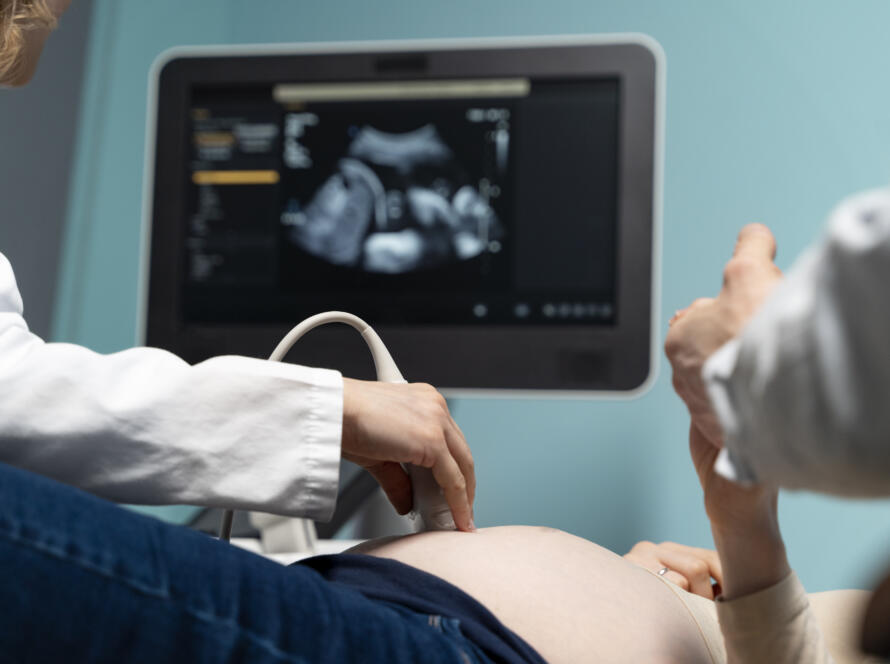
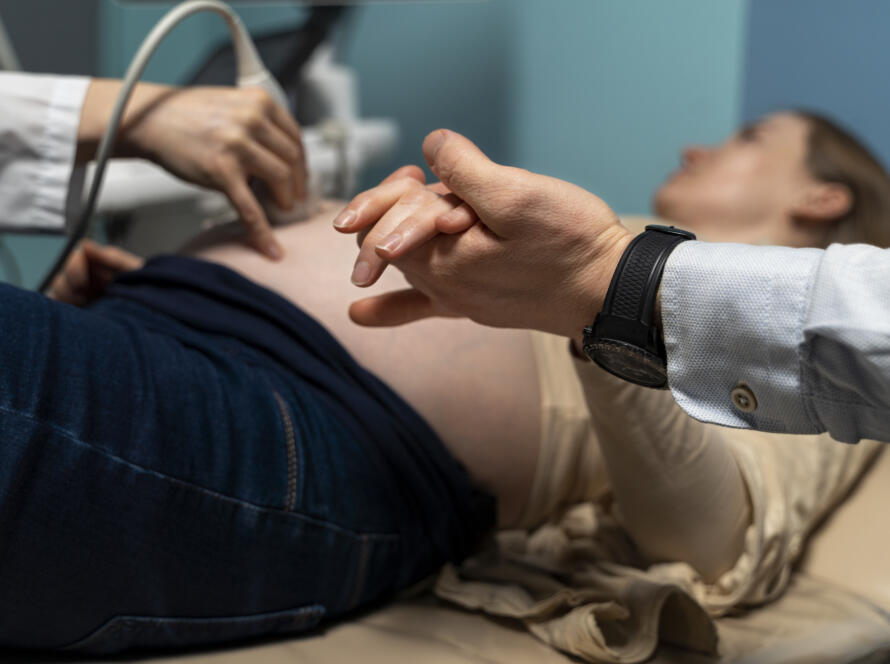
An abdominal ultrasound is the single most valuable imaging addition to an annual health check-up. Dr Furquan Ahmad assesses the liver, gallbladder, kidneys, spleen, pancreas, and major blood vessels in a single scan that takes less than 30 minutes and involves no radiation. Fatty liver, gallstones, kidney cysts, early signs of chronic kidney disease, and aortic dilation are all detectable on abdominal ultrasound long before they cause symptoms. For anyone above 35, this scan should be as routine as a blood test. You can find out more about ultrasound services at Jhansi Diagnostics & Fetal Medicine Centre on the dedicated page.
A chest X-ray provides a snapshot of the lungs, heart size, and ribcage. It can detect early lung infections, pleural effusions, cardiomegaly, and rib abnormalities. For anyone who smokes, has a chronic cough, or works in a dusty environment, an annual chest X-ray is particularly important. The digital X-ray services at the centre use modern equipment with significantly lower radiation than older film-based systems, making annual chest imaging a safe and practical choice.
An ECG is essential for anyone above 40 and for anyone with risk factors including hypertension, diabetes, a family history of heart disease, or symptoms such as palpitations, chest discomfort, or unexplained breathlessness. An ECG takes under 15 minutes and can detect arrhythmias, signs of a previous silent heart attack, and conduction abnormalities before they cause a clinical event. The ECG service at Jhansi Diagnostics & Fetal Medicine Centre provides same-day reports and direct access to Dr Furquan Ahmad for any questions about the findings.
Additional Tests by Age and Risk Group
Beyond the core annual tests, certain groups benefit from additional screening based on their age and risk profile.
Women above 30 should have a pelvic ultrasound as part of their annual check-up to screen for fibroids, ovarian cysts, and endometrial abnormalities. These conditions are common, often asymptomatic in their early stages, and significantly more manageable when found early. Women above 40 should discuss breast imaging with their doctor, with breast ultrasound being the preferred first-line investigation for Indian women given the higher prevalence of dense breast tissue in this population.
Men above 40 benefit from a scrotal ultrasound if they have any testicular abnormality, and from an abdominal ultrasound that includes assessment of the prostate and kidneys given the rising prevalence of benign prostatic enlargement and renal pathology in this age group.
Anyone above 50 should have an abdominal aortic assessment as part of their abdominal ultrasound, as the risk of aortic aneurysm increases with age and the condition is entirely silent until rupture, which is a surgical emergency.
People with a family history of kidney disease, liver disease, or abdominal cancers should begin annual abdominal imaging earlier, from age 30 or earlier depending on the family history.
People who have previously had abnormal blood test results, even if those results subsequently normalised, benefit from annual imaging to ensure that any structural correlate of those abnormal results is being monitored appropriately.
For Women During and After Pregnancy
The antenatal period is one of the most intensively monitored periods in a woman’s health, but the postnatal period often sees women neglect their own health entirely in the demands of new parenthood. A postnatal check-up that includes blood tests and where indicated a pelvic ultrasound to confirm uterine involution and rule out retained products is valuable in the months after delivery.
Women who experienced complications during pregnancy, including pre-eclampsia, gestational diabetes, or fetal growth restriction, are at higher lifetime risk of cardiovascular disease and metabolic conditions. Annual monitoring of blood pressure, blood sugar, and lipid levels is particularly important for this group. You can find out more about the full range of women’s health scanning services at the centre on the our services page.
How to Book Your Annual Health Check-Up in Jhansi
At Jhansi Diagnostics & Fetal Medicine Centre, all of the tests described in this guide are available under one roof. Abdominal ultrasound, chest X-ray, ECG, and the full range of specialist scans are performed and reported by Dr Furquan Ahmad personally, with same-day results and clear explanations of every finding.
You don’t need to wait until something is wrong. Booking an annual health check-up is the most straightforward thing you can do for your long-term health. Book your appointment through the website or reach the team through the contact us page with any questions about which tests are right for your age and risk profile. If you have specific questions about individual tests, the FAQs page is a helpful starting point.
Your health doesn’t announce problems in advance. An annual check-up is how you stay ahead of them.