Picking the next highest-value trending keyword: Soft Markers on a Pregnancy Scan: What They Mean and What to Do Next — extremely high anxiety-driven search intent, one of the most commonly Googled pregnancy scan topics, and directly positions Dr Furquan Ahmad as the trusted local expert who can provide clarity on a deeply misunderstood subject.
Soft Markers on a Pregnancy Scan: What They Mean and What to Do Next
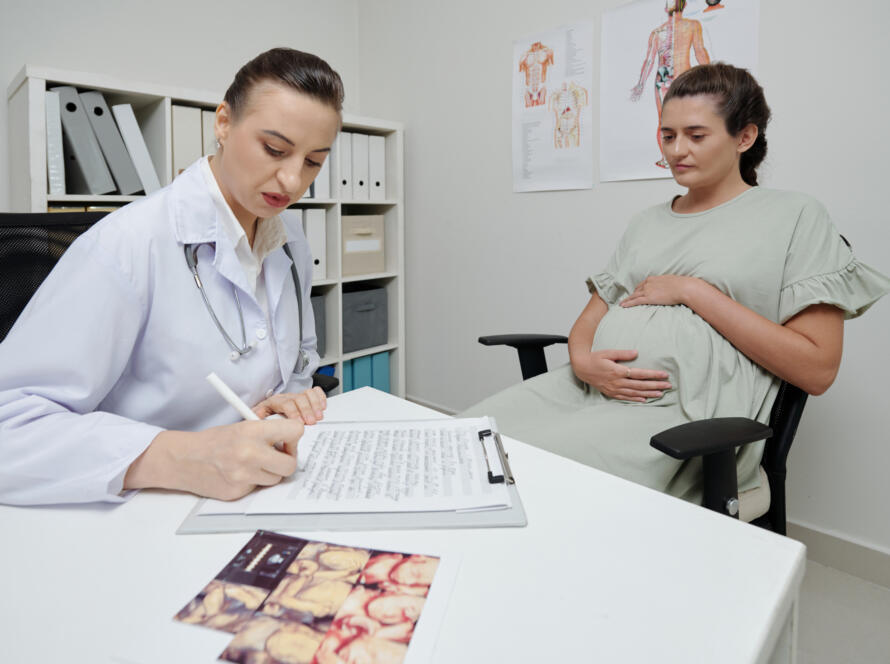
Few things cause more anxiety during a pregnancy than being told a scan has found a soft marker. The term itself is vague enough to be frightening without being specific enough to be understood. Mothers leave scan appointments knowing something was mentioned but often not knowing what it actually means, whether it is serious, or what they are supposed to do next. At Jhansi Diagnostics & Fetal Medicine Centre, Dr Furquan Ahmad, MBBS MD, takes time after every scan to ensure patients understand exactly what a soft marker is, what it does and does not mean, and what the appropriate next steps are. Leaving a patient confused and frightened about a finding that may be entirely insignificant is not acceptable care.
Here is a clear, honest explanation of soft markers, what they are, and how they should be interpreted.
What Is a Soft Marker?
A soft marker is a finding on a pregnancy ultrasound scan that is seen more commonly in babies with chromosomal conditions, particularly Down syndrome, than in the general population, but which can also be present in completely normal babies with no chromosomal abnormality whatsoever. The word soft distinguishes these findings from hard markers, which are major structural abnormalities that have a high and direct association with a specific condition.
A soft marker is not a diagnosis. It is not an abnormality in itself. It is a statistical association. When a soft marker is found on a scan, it means the finding is seen slightly more often in babies with a chromosomal condition than in babies without one. It does not mean the baby has a chromosomal condition. The majority of babies in whom soft markers are found have completely normal chromosomes and go on to be born healthy.
This distinction is one of the most important things Dr Furquan Ahmad communicates to patients at Jhansi Diagnostics & Fetal Medicine Centre whenever a soft marker is identified. A soft marker changes the statistical risk calculation. It does not change the baby. You can read more about the pregnancy scanning services available at the centre on the fetal medicine page.
What Are the Most Common Soft Markers?
Several findings on the anomaly scan are classified as soft markers. Each has its own level of association with chromosomal conditions and its own significance when found in isolation versus in combination with other markers or with abnormal blood test results.
A choroid plexus cyst is a small fluid-filled structure within the choroid plexus, the part of the brain that produces cerebrospinal fluid. These are found in a small percentage of normal pregnancies and almost always resolve spontaneously by 28 weeks. They are associated primarily with Edwards syndrome rather than Down syndrome, and their significance depends heavily on whether other markers or abnormalities are present. In isolation, with normal blood screening results, a choroid plexus cyst is generally considered a low-risk finding.
An echogenic bowel is a finding where the baby’s bowel appears as bright as bone on ultrasound. It can be a normal variant, but it is also associated with chromosomal conditions, cystic fibrosis, fetal infection, and swallowed blood. When echogenic bowel is found, Dr Furquan Ahmad assesses it in the context of the overall scan findings and the patient’s screening results before advising on next steps.
A short femur or short humerus refers to a femur or upper arm bone that measures shorter than expected for the gestational age. Mild shortening can be a normal familial variant, particularly in parents of shorter stature. More significant shortening, or shortening in combination with other markers, raises the level of concern.
An echogenic intracardiac focus is a small bright spot seen within one of the heart’s ventricles, most commonly the left. It represents a small calcium deposit on one of the papillary muscles of the heart and is present in a small percentage of normal pregnancies. It is one of the most commonly found soft markers and one of the least significant when found in isolation in a low-risk pregnancy.
A mild renal pelvis dilatation, also called pyelectasis, refers to mild widening of the collecting system of one or both kidneys. Mild dilatation is common, often resolves after birth, and in isolation is considered a minor soft marker. More significant dilatation requires postnatal follow-up to assess kidney function.
A thickened nuchal fold, measured on the anomaly scan at 18 to 20 weeks as distinct from the NT measurement at 11 to 14 weeks, is considered one of the strongest soft markers for Down syndrome. A measurement of 6 millimetres or more on the anomaly scan carries a meaningful increase in risk and typically warrants detailed counselling and an offer of further testing.
An absent or hypoplastic nasal bone is another soft marker with a meaningful association with Down syndrome. Its significance depends on the gestational age, ethnicity, and whether other markers are present alongside it.
How Does a Soft Marker Change the Risk Calculation?
When a soft marker is found, Dr Furquan Ahmad does not assess it in isolation. He considers it alongside the patient’s age-related background risk, the results of any first trimester or second trimester screening blood tests, and whether any other soft markers or structural findings are present on the same scan.
Each soft marker has a likelihood ratio associated with it, a number that represents how much finding that marker adjusts the background risk upward. When a soft marker is found in a patient who already had a low background risk from a normal first trimester combined screen, the adjusted risk after adding the soft marker may still be well within the low-risk range. In this situation, the finding is reassuring rather than alarming.
When a soft marker is found in a patient who already had an elevated risk from screening, or when multiple soft markers are found on the same scan, the adjusted risk rises more significantly and further testing is typically offered. This is why the soft marker finding cannot be evaluated without knowing the full clinical picture, and why Dr Furquan Ahmad always reviews the complete background before advising on next steps. The FAQs page at Jhansi Diagnostics & Fetal Medicine Centre has more information on how screening results and scan findings are interpreted together.
What Are the Options After a Soft Marker Is Found?
The options available after a soft marker is identified depend on the risk level after adjustment and the patient’s own preferences. Dr Furquan Ahmad presents these options clearly and without pressure, allowing families to make informed decisions based on their individual circumstances and values.
For patients whose adjusted risk remains low after a soft marker finding, continued standard monitoring with no further testing is a reasonable and appropriate choice. Many families in this situation choose reassurance from the low adjusted risk figure and continue their pregnancy with normal antenatal care.
For patients who want greater certainty regardless of their risk figure, or whose adjusted risk is elevated, non-invasive prenatal testing is an option. NIPT analyses cell-free fetal DNA in the mother’s blood and provides a highly accurate assessment of the risk of the most common chromosomal conditions including Down syndrome, Edwards syndrome, and Patau syndrome. It is non-invasive, poses no risk to the pregnancy, and can be performed from 10 weeks of pregnancy onwards.
For patients who want a definitive chromosomal diagnosis, invasive testing through amniocentesis or chorionic villus sampling provides a direct analysis of the baby’s chromosomes. These procedures carry a small risk of pregnancy loss and are typically offered when the risk of a chromosomal condition is high enough to make the procedural risk acceptable in comparison.
Dr Furquan Ahmad guides families through this decision-making process with the information they need to choose the path that is right for them, without imposing a direction. The goal is always informed consent and supported decision-making, not anxiety-driven urgency. You can explore the full range of fetal medicine services at the centre on the our services page.
What Should You Do If Your Scan Report Mentions a Soft Marker?
The first and most important thing to do is not to search the internet for the term in isolation. Internet searches for soft markers almost always surface the statistical association with chromosomal conditions without the context that makes that association meaningful, and the result is significant unnecessary anxiety.
The second thing to do is to speak directly with Dr Furquan Ahmad or your referring doctor about what the finding means in the specific context of your pregnancy, your age, your screening results, and whether any other findings were present on the same scan. A soft marker that means very little in one clinical context may be more significant in another, and only a doctor with access to the complete picture can give you the right interpretation.
At Jhansi Diagnostics & Fetal Medicine Centre, patients who have a soft marker identified during their scan are not sent away with a report and no explanation. Dr Furquan Ahmad discusses the finding directly, explains what it means for the specific risk calculation in that patient’s case, and outlines what options are available before the patient leaves the centre.
If you have received a scan report that mentions a soft marker and you have not yet had a detailed explanation of what it means, you can book a consultation through the booking appointment page. The team is also available through the contact us page for any questions. You can read more about the centre’s approach to fetal medicine on the about us page.
A soft marker is information. In the right hands, with the right context, it leads to clarity rather than confusion. That is what every family deserves after a pregnancy scan.