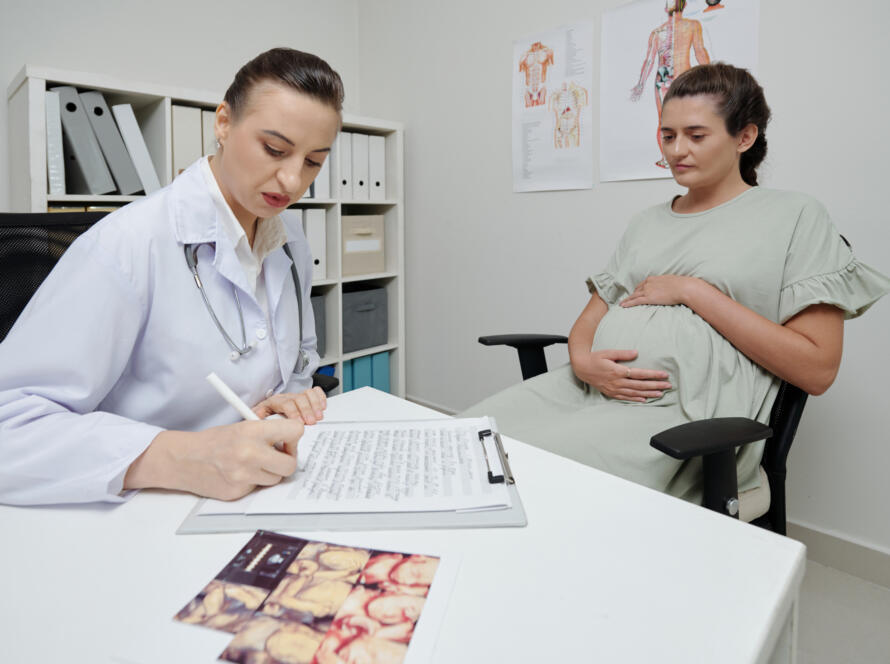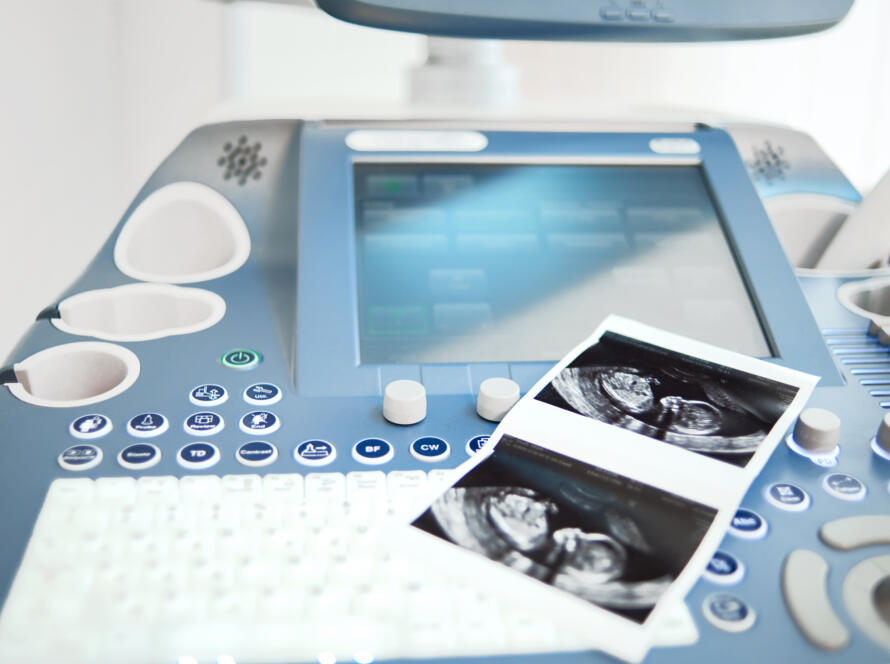
When a patient walks out of a diagnostic centre with an ultrasound report in hand, they trust that what’s written on that paper is accurate. They take it to their doctor, who makes clinical decisions based on it. Those decisions affect treatment plans, referrals, surgeries, and in the case of pregnancy, the entire management of a mother and baby’s care. The ultrasound report is not a formality. It is a medical document with real consequences. At Jhansi Diagnostics & Fetal Medicine Centre, Dr Furquan Ahmad, MBBS MD, has built his practice around one principle: every report that leaves this centre has to be right.
Here, Dr Furquan Ahmad explains exactly what goes into producing a truly accurate ultrasound report and why not all reports are created equal.
It Starts Before the Scan Begins
Most people assume the accuracy of an ultrasound depends entirely on what happens during the scan itself. Dr Furquan Ahmad disagrees. Accuracy starts before the probe touches the patient.
Before beginning any scan, he reviews the clinical information available, the patient’s symptoms, their referral notes, their previous scan reports if any, and the specific question the referring doctor needs answered. This context shapes everything. Knowing that a patient has a history of ovarian cysts changes how carefully the ovaries are examined. Knowing that a referring doctor suspects a specific liver condition means that area gets extra attention and documentation.
Walking into a scan without this context is like trying to answer a question you haven’t fully read. The images may look the same, but what you’re looking for, and therefore what you find, is entirely different. Patients visiting Jhansi Diagnostics & Fetal Medicine Centre are always asked about their symptoms and clinical history before the scan begins for exactly this reason. You can read more about the centre’s approach on the about us page.
The Scan Itself: Patience Over Speed
Dr Furquan Ahmad is direct about this. Speed is the enemy of accuracy in ultrasound. A scan done in five minutes to keep a queue moving is not the same as a scan done with the time needed to examine every relevant structure properly.
During an abdominal ultrasound, for example, each organ needs to be examined from multiple angles. The liver requires assessment of its size, texture, vascularity, and any focal lesions. The kidneys need to be measured and their collecting systems checked. The gallbladder needs to be assessed for stones, wall thickness, and surrounding fluid. Rushing through any of these means findings get missed.
The same applies to pregnancy scans. An anomaly scan done properly takes considerably longer than one done in a hurry. Every structure on the fetal anatomy checklist needs to be visualised and documented. If the baby’s position doesn’t allow a clear view of a particular structure, Dr Furquan Ahmad waits, repositions, and tries again rather than leaving it unassessed. You can find out more about the ultrasound services available at the centre on the dedicated page.
Equipment Matters, But Only Up to a Point
Good equipment is necessary but not sufficient. Dr Furquan Ahmad uses this analogy: a professional photographer and an amateur can both use the same high-end camera. The equipment doesn’t determine the quality of the photograph. The eye behind it does.
Modern ultrasound machines produce excellent image quality. But the machine cannot decide which plane of view shows the most clinically relevant information. It cannot recognise that a shadow is masking a lesion and adjust the angle accordingly. It cannot differentiate between a normal anatomical variant and an early pathology that looks similar on screen. These judgements come from experience, knowledge, and attention.
At Jhansi Diagnostics & Fetal Medicine Centre, the equipment is well maintained and regularly updated. But Dr Furquan Ahmad is clear that patients choose this centre for the doctor behind the machine as much as the machine itself.
Writing the Report: Clarity Is as Important as Accuracy
A finding that is identified but poorly documented is almost as useless as a finding that is missed entirely. Dr Furquan Ahmad puts considerable thought into how reports are written, not just what they contain.
A good ultrasound report answers the clinical question that was asked. It describes findings in language that is specific enough to be actionable. It distinguishes clearly between what was seen, what was not seen, and what could not be assessed due to technical limitations such as patient body habitus or fetal position. It does not use vague phrases that leave the referring doctor uncertain about what to do next.
For pregnancy reports in particular, measurements need to be precise, findings need to be compared against gestational age norms, and any concerns need to be communicated in a way that is both clinically useful and compassionate for the parents reading them. The fetal medicine page at the centre has more detail on the fetal medicine services and what patients can expect from their reports.
The Role of Experience in Catching What Others Miss
Dr Furquan Ahmad is honest about something that doesn’t get discussed enough in diagnostics: experience changes what you see. Not because experienced radiologists have better eyesight, but because they have a larger mental library of what normal looks like, what abnormal looks like, and crucially, what the grey area between the two looks like.
Early-stage conditions often don’t present as textbook findings. A small hepatic lesion in its early stages doesn’t look like the classic image in a radiology textbook. A subtle cardiac defect in a fetus at 20 weeks requires knowing exactly what a normal four-chamber view should look like and recognising when something is slightly off. These recognitions come from years of seeing thousands of scans across a wide variety of presentations.
This is why Dr Furquan Ahmad personally performs and interprets every scan at Jhansi Diagnostics & Fetal Medicine Centre rather than delegating to technicians. The interpretation is where the value lies, and it’s not something that can be standardised or outsourced without compromising accuracy.
What Patients Can Do to Help
Accuracy is a two-way process. Dr Furquan Ahmad asks patients to come prepared with relevant information: previous scan reports, blood test results, and a clear description of their symptoms. For pregnancy scans, knowing the exact gestational age and bringing any previous antenatal records helps enormously.
Patients should also feel comfortable asking questions during and after the scan. If a finding is mentioned and not explained, ask. If a report contains terminology that isn’t clear, ask for it to be explained before leaving. The FAQs page addresses many common questions, and the team is always available through the contact us page for follow-up queries.
Booking a Scan You Can Trust
An accurate ultrasound report is not a luxury. It’s the foundation of every clinical decision that follows it. Patients across Jhansi and Bundelkhand choose Jhansi Diagnostics & Fetal Medicine Centre because they know Dr Furquan Ahmad treats every report as exactly that: a document that matters.
Book your appointment through the website and experience the difference that a truly thorough scan makes.