Most patients leave a diagnostic centre the same way they arrived: quietly. They collect their report, fold it into their bag, and head straight to their doctor without fully understanding what it says. Some don’t ask questions because they don’t want to take up the doctor’s time. Others assume the report speaks for itself. A few simply don’t know what to ask. At Jhansi Diagnostics & Fetal Medicine Centre, Dr Furquan Ahmad, MBBS MD, has seen this pattern repeat itself across thousands of patient visits. His view is straightforward: a scan you don’t understand is a scan that hasn’t fully served you.
Here are the questions Dr Furquan Ahmad says every patient should ask after their scan, and why each one matters.
1. What Did the Scan Find and What Does It Mean?
This sounds obvious, but most patients don’t ask it directly. They receive a report with medical terminology and assume their referring doctor will explain it later. The problem is that the person best placed to explain the findings is the radiologist who performed the scan, not the doctor reading a report second-hand days later.
Before leaving Jhansi Diagnostics & Fetal Medicine Centre, patients are encouraged to ask Dr Furquan Ahmad directly: what did you find, and what does it mean for my health? The answer should be given in plain language, not medical jargon. If the explanation isn’t clear, ask again. You are entitled to understand what was found in your own body.
2. Is Everything Normal, or Is There Something That Needs Attention?
A report can contain a lot of descriptive language without making it obvious whether the findings are cause for concern or completely unremarkable. Terms like “mild hepatomegaly”, “small follicular cyst”, or “borderline amniotic fluid” mean very different things in different clinical contexts. What sounds alarming may be entirely normal. What sounds benign may need follow-up.
Asking this question directly cuts through the ambiguity. Dr Furquan Ahmad separates findings into three clear categories for his patients: normal and nothing to worry about, something to monitor over time, and something that needs prompt attention. Knowing which category your findings fall into before you leave the centre is far more useful than reading a report in the car and worrying about terminology you don’t recognise. You can also find answers to common scan-related questions on the FAQs page.
3. Do I Need a Follow-Up Scan and If So, When?
Not all findings are resolved in a single scan. Some conditions are monitored over time to see whether they change, grow, resolve, or remain stable. A small kidney cyst, a fibroid in early pregnancy, or a borderline measurement in a fetal growth scan may all require a repeat scan after a specific interval.
If your report includes any such finding, ask directly: do I need to come back for another scan, and when? Dr Furquan Ahmad gives this recommendation as part of the consultation at Jhansi Diagnostics & Fetal Medicine Centre whenever a follow-up is needed, but patients should feel confident asking the question themselves if it hasn’t been addressed. Knowing your follow-up timeline means you don’t end up back in the queue six months later wondering whether you left it too long. You can book follow-up appointments easily through the booking appointment page.
4. Is There Anything My Referring Doctor Needs to Know Urgently?
Most scan findings are communicated through the written report, which the patient carries to their doctor at the next available appointment. But some findings need to reach the referring doctor sooner than that. If a scan reveals something that requires prompt action, waiting for a routine appointment is not the right approach.
Ask Dr Furquan Ahmad directly: is there anything in this report that my doctor needs to know about today? If the answer is yes, the centre will communicate with your referring doctor directly. If the answer is no, you can attend your next scheduled appointment with confidence. This question is particularly important for pregnancy scans, where certain findings may require same-day review by an obstetrician. The fetal medicine team at the centre is experienced in managing exactly these situations.
5. What Were You Looking For That You Didn’t Find?
This is the question almost no patient thinks to ask, and Dr Furquan Ahmad considers it one of the most important ones. Every scan is performed in response to a clinical question. Sometimes the scan rules out what the doctor was concerned about. Sometimes the area of concern simply couldn’t be visualised clearly due to technical limitations.
Knowing what was ruled out is just as useful as knowing what was found. If a scan was requested to check for gallstones and none were found, that’s important information. If the pancreas couldn’t be fully visualised due to overlying bowel gas, that’s also important information because it means the clinical question hasn’t been fully answered and may need a different imaging approach.
Dr Furquan Ahmad documents technical limitations clearly in his reports at Jhansi Diagnostics & Fetal Medicine Centre, but asking this question verbally ensures you understand the full picture before leaving.
6. For Pregnancy Scans: Is My Baby’s Development on Track?
Pregnancy scans carry an emotional weight that other scans don’t. Parents aren’t just checking for a pathology, they want to know their baby is growing well and developing normally. The report will contain measurements and descriptions, but what every parent really wants to hear is a direct answer to this question.
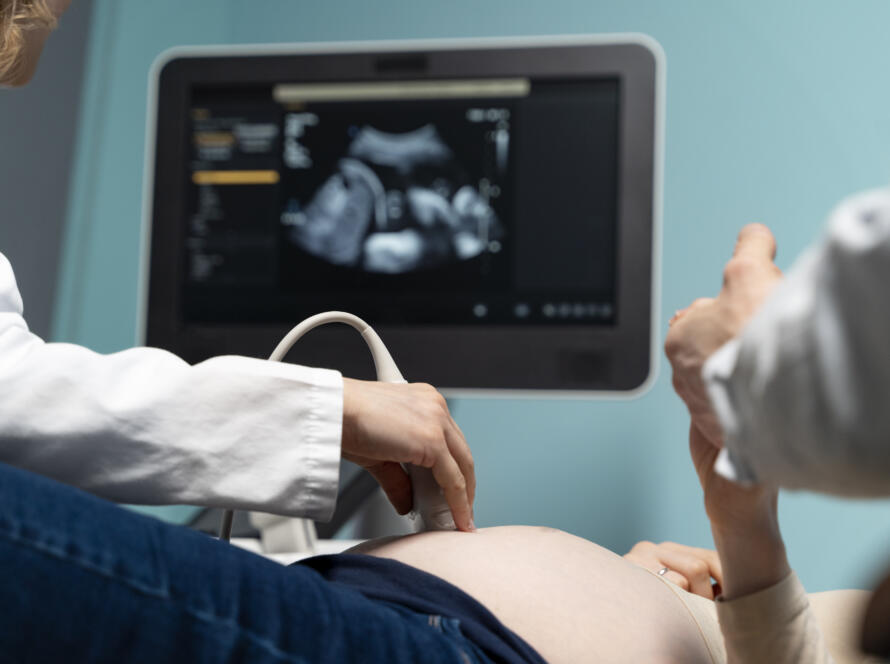
Ask Dr Furquan Ahmad plainly: based on what you’ve seen today, is my baby’s development on track for this stage of pregnancy? If yes, that reassurance is valuable. If there are concerns, you deserve to hear them explained clearly and compassionately, along with what the next steps are. The ultrasound department at the centre performs all standard pregnancy scans including dating scans, NT scans, anomaly scans, and growth monitoring scans.
7. Who Should I See Next and What Should I Tell Them?
A scan rarely exists in isolation. It’s part of a broader clinical journey. After your scan, you may need to see your GP, an obstetrician, a surgeon, a gastroenterologist, or another specialist depending on what was found. Knowing who to see next and what to tell them helps you navigate that journey without delay.
Dr Furquan Ahmad recommends asking this question at the end of every consultation: based on today’s findings, who is the most appropriate person for me to see next, and is there anything specific I should mention to them? This question ensures the clinical handover happens properly and that you arrive at your next appointment with the right information rather than starting from scratch.
If you’re unsure about next steps after your scan, the team at Jhansi Diagnostics & Fetal Medicine Centre is always reachable through the contact us page. You can also explore the full range of our services to understand what other diagnostic tests may be relevant to your care.
Your Scan Is Only as Useful as Your Understanding of It
Dr Furquan Ahmad puts it simply: a report you don’t understand cannot help you. The scan has already been done. The findings are already there. The only remaining variable is whether you leave with a clear enough understanding to act on them appropriately.
At Jhansi Diagnostics & Fetal Medicine Centre, patients are encouraged to ask every question they need to before leaving. No question is too basic and no concern is too small. A few minutes of conversation after your scan can make the difference between a report that sits in a folder and one that genuinely guides your care. Read more about the centre’s patient-first approach on the about us page.